


The Implant Bridge
Progress from restoring one implant to restoring multiple implants with confidence.
Engage Two takes the principles learned in single implant restoration and applies them to short-span implant-supported bridges.
You will work through the complete restorative workflow — from case assessment and implant positioning through to impressions, laboratory communication, bridge fit, passive seating, torque, occlusion and maintenance.
The focus remains practical, restorative and directly relevant to everyday GDP practice.
Your place includes:
Next available course dates
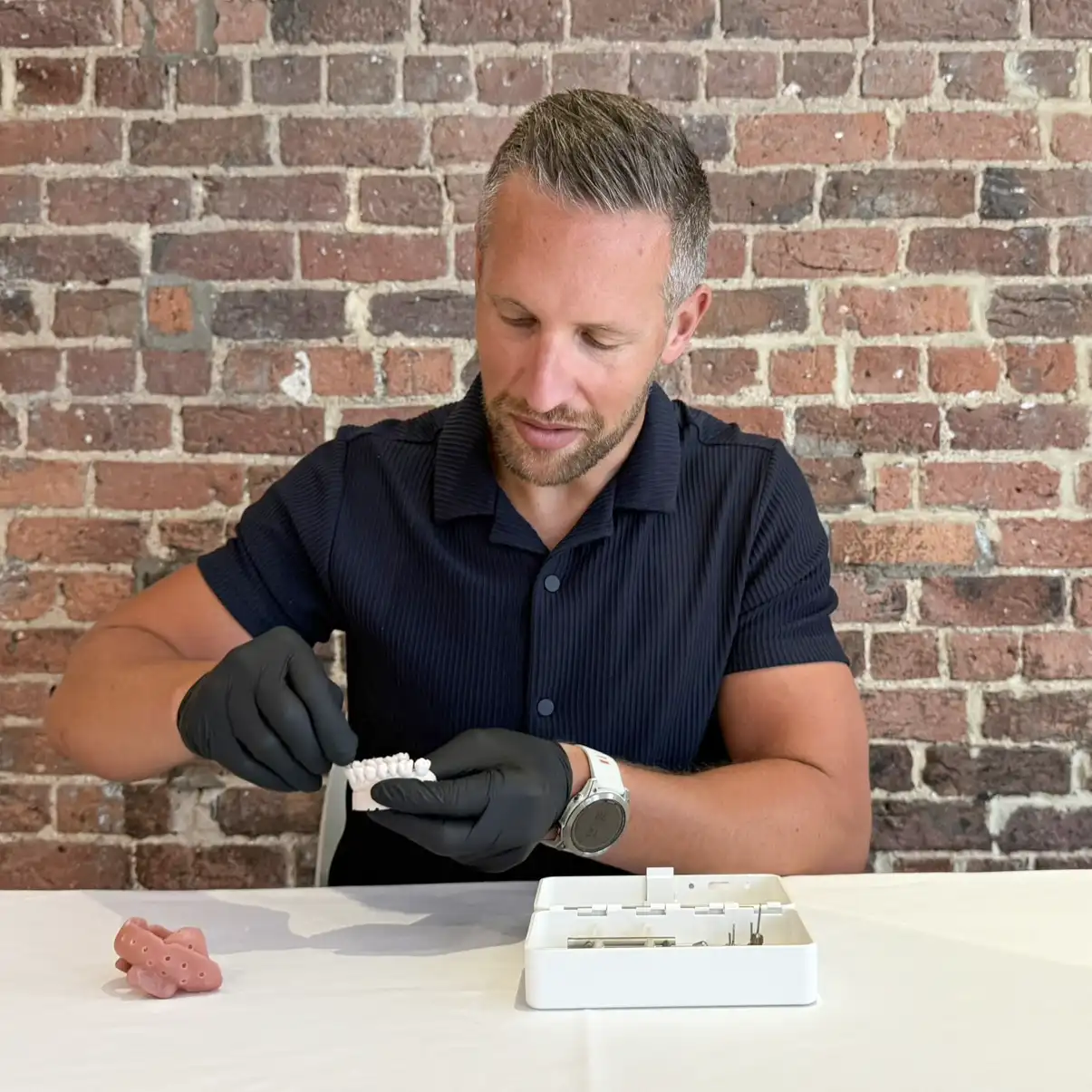
Places are limited to 12 delegates to maintain a focused, hands-on learning environment.
Course highlights
Take the next step beyond the single implant crown
Restoring a single implant is an important first step.
But once more than one implant supports a restoration, the restorative considerations change.
Implant position, angulation, restorative space, impression accuracy, framework fit, screw mechanics and occlusion all become increasingly important.
Engage Two is designed to make that progression structured and understandable.
You will learn a repeatable workflow for assessing and restoring appropriately selected implant-supported bridges, while developing a clearer understanding of what makes multiple-unit implant restorations predictable — and what should make you stop and ask for help.
The aim is not to make complex implant dentistry appear simple.
It is to give you the knowledge, practical experience anddecision-making framework to manage suitable cases more confidently andrecognise those that require greater experience or specialist input.




Who is this course for?
Engage Two is ideally suited to dentists who have completed Engage One or already have equivalent experience restoring straightforward single implant crowns.
Build confidence with multiple-unit implant restoration
FAQs
Common questions about our Engage Two course.
Engage One is the ideal foundation because Engage Two assumes that you already understand the principles of restoring a straightforward single implant crown. Dentists with equivalent clinical experience can also attend.
No. Engage Two remains firmly restorative-led. The course is designed for dentists who may continue to refer the surgical phase while becoming increasingly involved in planning and restoring suitable cases.
The main focus is appropriately selected, straightforward short-span implant-supported fixed restorations. More advanced and full-arch cases are discussed in the context of recognising complexity rather than encouraging delegates to treat beyond their experience.
Yes. Digital and conventional workflows are considered, including the additional accuracy considerations that become important when recording the position of multiple implants.
Multiple implants create a more complex restorative situation than a single implant. Engage Two explains how inaccurate impressions, framework discrepancies and incomplete seating can create mechanical problems and how these should be assessed clinically.
Yes. Screw-retained implant restorations form an important part of the course, including fitting, seating verification, screw tightening, occlusion and screw-access management.
Yes. Restoratively driven planning and communication are central to Engage. You will develop a clearer understanding of the information the surgeon and technician need to produce a predictable restorative outcome.
No course should suggest that. Engage Two provides structured education and practical experience for appropriately selected cases. Clinical competence develops through training, experience, reflection and support, and recognising when a case exceeds your current competence remains essential.
Still have questions?
Whatever you need to know, we're happy to help.
Why Engage Implant?
Actually hands-on
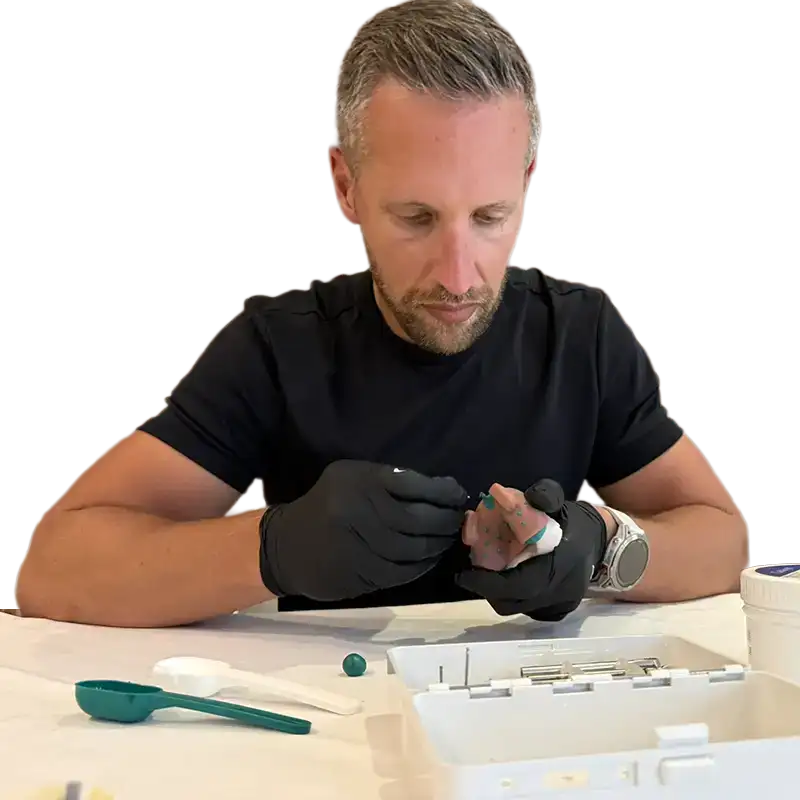
You won't just watch implant restoration being demonstrated. You'll handle the components and rehearse the clinical workflow yourself.
Small-group learning
Engage courses are limited to 12 dentists so there is meaningful practical time and direct access to the course tutor.
Transferable principles
Courses focus on the concepts that underpin implant restoration across different systems, laboratories and clinical settings.
Continued support
Delegates have access to guidance around case selection, restorative planning and surgical support.