

Implant Crown Torque: Why Torque Values Matter and How to Use a Torque Wrench

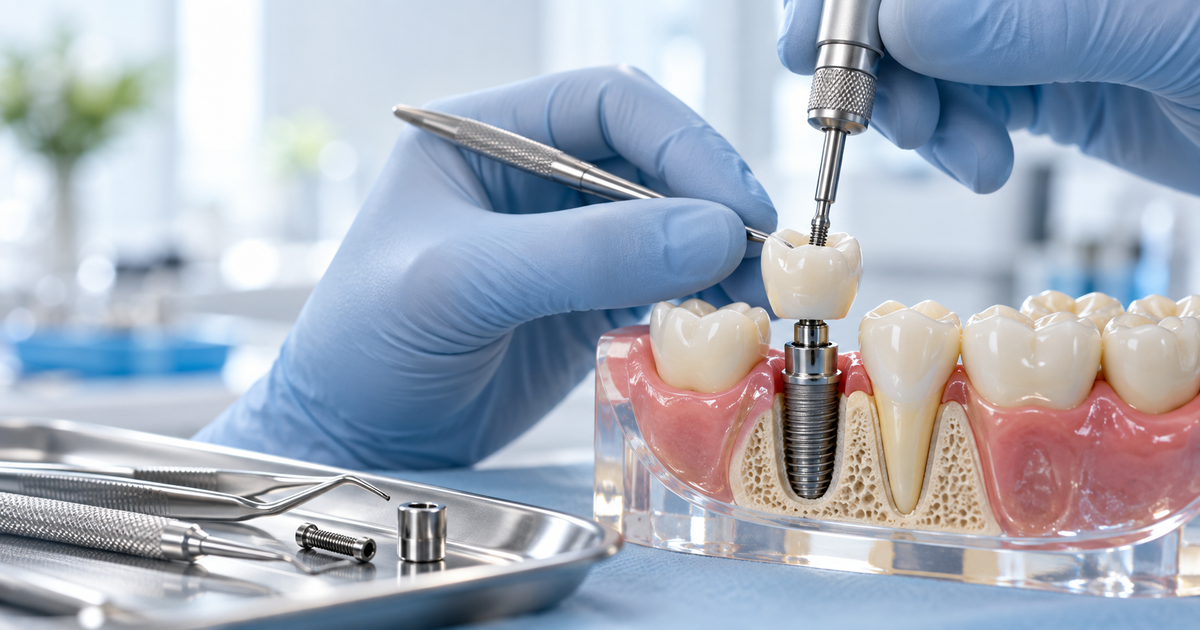
“What torque should I use for an implantcrown?” sounds like a simple question. In reality, there is no safe universalnumber.
The prescribed torque depends on theimplant system, restorative connection, screw design, material and component.The correct answer is therefore the current manufacturer instruction for theexact restoration being fitted.
What every restorative dentist shouldunderstand is why torque matters, what the torque wrench is actually doing andwhy “I tightened it firmly by hand” is not an adequate prosthetic protocol.
Torque and preload are related, but they are not the samething
Torque is the rotational force applied tothe screw. Preload is the tensile force created in the screw as it stretcheselastically during tightening. That preload helps clamp the prostheticcomponents together.
Only part of the applied torque becomesuseful preload. Much is lost through friction at the screw threads andcontacting surfaces. Screw design, surface treatment, lubrication orcontamination and repeated tightening cycles can therefore influence the behaviourof the joint.
Why too little torque is a problem
If the screw is not tightened according tothe prescribed protocol, the preload may be insufficient to maintain a stablejoint under function. This can contribute to micromovement and screw loosening.
Clinically, “finger tight” or “hand tight”is useful only when a manufacturer specifically calls for it at an interimstage. It should not replace calibrated final torque when a specified torque isrequired.
Why more torque is not automatically better
Exceeding the prescribed torque canoverstress the screw or interface and may increase the risk of deformation orfracture. A torque wrench is not a licence to improvise a higher value becausea crown “feels loose”.
Use the value and sequence specified forthe specific component. If the joint behaves unexpectedly, identify the causerather than simply applying more force.
The torque wrench is a measuring instrument
A calibrated prosthetic torque deviceallows a defined rotational force to be delivered. Different systems use beam,toggle, ratchet or other mechanisms, and the way the target is read or reachedvaries.
You should be familiar with the devicebefore using it intraorally. Confirm its units, assembly, direction ofrotation, maintenance requirements and the correct driver interface.
A practical crown torque sequence
First verify that the restoration iscompletely seated. Then confirm the correct screw and driver. Stabilise thedriver so it remains properly engaged in the screw head. Apply torque smoothlyusing the manufacturer’s device and prescribed value. Follow any specifiedwaiting or retorque sequence. Finally, document what was applied.
The exact sequence must always defer to thecurrent manufacturer instructions. This is especially important when switchingbetween implant systems or between implant-level and abutment-levelrestorations.
Do not use torque to “pull” a restoration into place
One of the most important practical rulesis that the prosthetic screw should not be used to force an incorrectly seatedcrown down onto the implant.
If the crown is not seating passively,investigate proximal contact, soft-tissue interference, internal debris,connection mismatch or another cause. High screw resistance during insertion isa warning, not reassurance.
Should you retorque?
Some restorative protocols specifyretightening after a defined interval because surface settling can reducepreload after initial tightening. Other components have different instructions.
Evidence from laboratory studies also showsthat repeated tightening and loosening can change removal torque and producethread wear. The practical conclusion is not to repeatedly tighten a prostheticscrew without reason. Follow the protocol designed for that particular system.
What should be recorded in the notes?
For maintainability, record theimplant/restorative system, restoration type, screw or component whererelevant, the torque applied and the method used to verify seating. If a futureclinician needs to retrieve or maintain the restoration, this information isvaluable.
A useful laboratory and surgicalinformation trail is part of long-term implant care.
Common torque mistakes
Common errors include using a rememberedvalue from a different system, confusing Ncm with another unit, using the wrongdriver, failing to verify seating before final torque, relying on handtightening, using an unmaintained torque instrument and repeatedly tighteningor loosening the same screw without considering the manufacturer guidance.
These are process errors that can largelybe prevented by having a standard implant crown fit checklist.
The simple rule for GDPs
Do not memorise one implant crown torquevalue. Learn the mechanical principle, learn to use the instrument correctly,and confirm the current prescribed value every time you work with an unfamiliarcomponent.
That approach is safer, more transferableand more useful than a table of numbers that can become outdated or be appliedto the wrong restorative interface.
Related Engage reading
· Related Engage guide: How to start restoring dental implants
· Related Engage guide: The Single Implant Crown workflow
Want to put this into practice?
On Engage One you will use a prosthetictorque driver yourself as part of fitting a screw-retained single implantcrown, so the relationship between component seating, screw engagement andfinal torque becomes practical rather than theoretical.
Clinical note: This article provides general educational information for dental professionals. Implant components, tightening protocols, impression procedures and restorative workflows vary by manufacturer and clinical situation. Always work within your personal competence and indemnity, use current manufacturer instructions, and refer when appropriate.
References and further reading
· Shui et al. Impact of repeatedtightening and loosening on the implant-prosthetic screw joint: systematicreview and meta-analysis — https://pubmed.ncbi.nlm.nih.gov/41203042/
· Effects of prosthetic screwmodifications and tightening conditions: systematic review and meta-analysis — https://pubmed.ncbi.nlm.nih.gov/42399186/
GDC Scope of Practice guidance — https://www.gdc-uk.org/standards-guidance/standards-and-guidance/scope-of-practice